
What Is an AI Agent? Explained Simply (2026)
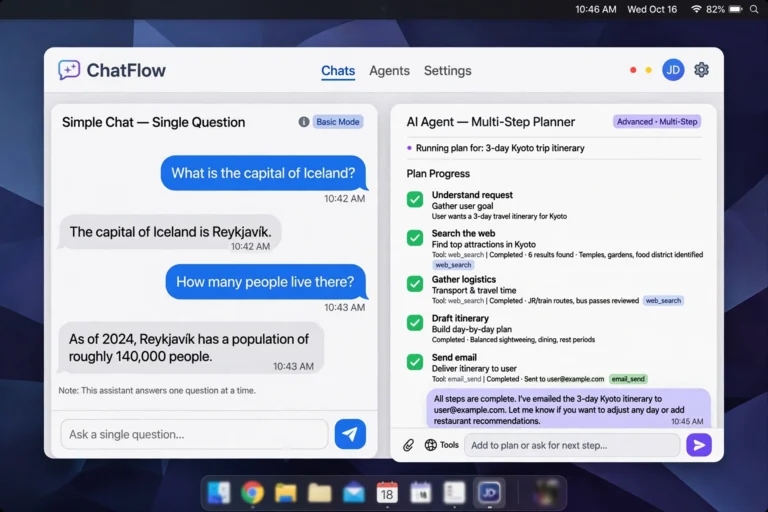
What is an AI agent? An AI agent is a software program powered by artificial intelligence that can take a goal you give it, make a plan, and carry out multiple steps on its own to reach that goal — without you guiding every move. Unlike a basic chatbot that answers one question at a time, an AI agent can browse the web, use tools, write files, send messages, and check its own work along the way.
If you have ever wished an AI could do more than just chat — book the flight, write the report, organize your inbox — that is exactly what AI agents are built for. This guide explains what they are, how they work, real examples, and what to watch out for.
AI Agent Meaning: The Simple Definition
The word “agent” comes from the Latin agere, meaning “to act.” That is the perfect summary: an AI agent is AI that acts. You give it an objective, and it works toward it independently.
Here is the difference in one sentence: a chatbot waits for your next message; an AI agent takes initiative. Tell a chatbot “write a haiku about rain” and it writes one. Tell an AI agent “plan my birthday trip to Lisbon under $1,200” and it might search flights, compare hotels, check the weather for your dates, build a day-by-day itinerary, and hand you a finished plan.
This autonomy is what makes agents different from the AI tools most people already know. If you are new to AI chatbots, our How to Use ChatGPT for Beginners guide is a good starting point before diving into agents.
AI Agent vs Chatbot: What’s the Difference?
People mix these two up constantly. Here is a clear breakdown:
- Scope: A chatbot handles one conversation turn at a time. An AI agent handles entire multi-step workflows.
- Tools: A chatbot mainly produces text. An AI agent can use tools — web search, code execution, email, calendars, databases, and other apps.
- Memory and planning: A chatbot reacts to your last message. An AI agent breaks a goal into sub-tasks, tracks progress, and adjusts its plan when something changes.
- Initiative: A chatbot waits. An AI agent can decide what to do next without being asked each time.
Think of it this way: a chatbot is like a knowledgeable friend you can ask questions. An AI agent is like a capable assistant you can delegate entire jobs to.
How Do AI Agents Work?
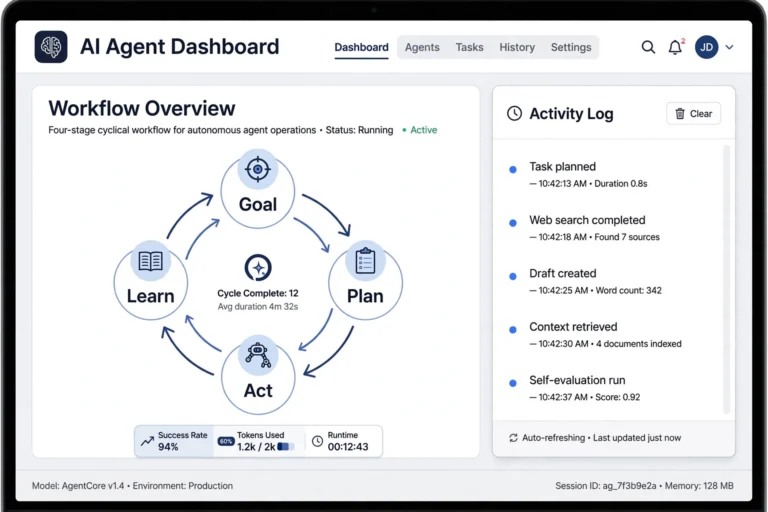
Most AI agents run on a repeating loop with four stages. Understanding this loop helps you use agents far more effectively.
1. Goal: You State the Objective
Everything starts with your instruction. The clearer and more specific your goal, the better the agent performs. “Research the best noise-cancelling headphones under $200 and summarize the top 3 in a table” works far better than “find headphones.”
2. Plan: The Agent Breaks It Down
The agent uses a large language model to split your goal into smaller steps. For the headphone example, its plan might be: search review sites, filter by price, compare ratings, then build the comparison table.
3. Act: The Agent Uses Tools
This is the key stage. The agent calls on connected tools — searching the web, running code, reading files, sending emails — and completes each step one by one. Good agents show you what they are doing as they go, so you can follow along.
4. Learn: The Agent Checks Its Work
After acting, the agent reviews the results. Did the search return useful results? Is the table complete? If something is off, it loops back and tries again. This self-checking loop is what lets agents handle complex jobs that would take you dozens of manual steps.
Real Examples of AI Agents in 2026
AI agents are not science fiction. You are probably already using some of them.
- Coding agents: Describe a feature in plain English and the agent writes the code, runs tests, and fixes bugs.
- Research agents: Give one a question like “summarize the latest research on intermittent fasting” and it searches dozens of sources, reads them, and writes a cited summary.
- Shopping and travel agents: Tell one your budget and it compares prices across sites and finds the best deals.
- Customer support agents: Many company websites now run agents that can actually solve problems — checking your order status, issuing refunds, rescheduling appointments — not just answering FAQs.
- Productivity agents: Agents inside email and calendar apps that draft replies, schedule meetings, and organize your inbox based on your habits.
- Voice assistants: Modern phone assistants can now complete multi-step requests, like “text Sarah that I’ll be 15 minutes late and find parking near the restaurant.”

How to Use an AI Agent: Step-by-Step
Ready to try one? Here is a walkthrough that works with most AI agent tools.
Step 1: Pick the Right Agent for the Job
Different agents specialize in different tasks. A coding agent will not plan your vacation well. Start with general-purpose agents built into the AI apps you already use — many chatbots now have an “agent mode” or “deep research” feature that turns them into agents.
Step 2: Write a Clear, Specific Goal
An agent is only as good as your instructions. Include the goal, the constraints (budget, deadline, format), and what “done” looks like. Example prompts:
“Plan a 4-day trip to Istanbul for two people with a $1,500 total budget. Include flights from Chicago, a hotel under $120/night, and a day-by-day itinerary. Present it as a table with estimated costs.”
“Research the 5 most popular project management tools for small teams in 2026. Compare pricing, key features, and user ratings, and recommend the best one for a 10-person remote team.”
Step 3: Watch the First Few Steps
Let the agent start, then check its plan before it goes too far. If it misunderstood your goal, stop it and correct the instructions. Five minutes of supervision at the start saves an hour of redoing bad work.
Step 4: Review and Refine the Output
Agents make mistakes — wrong facts, missed constraints, odd assumptions. Treat the first result as a draft, not a finished product. Ask follow-up questions or give corrections, and the agent will revise.
Tip: The prompt-writing skills from our beginner guides transfer directly to agents. Clearer instructions mean better agent results every time.
Benefits and Limitations of AI Agents
What AI Agents Are Great At
- Saving time on multi-step research, comparisons, and planning that would take you hours.
- Working 24/7 — an agent can monitor prices, track news, or process data while you sleep.
- Consistency — agents follow the same careful process every time, without getting tired or skipping steps.
- Combining tools — an agent can pull data from your calendar, email, and the web in a single workflow.
What to Watch Out For
- They can be wrong with confidence. Agents sometimes present incorrect facts or broken plans as if everything went perfectly. Always verify important results.
- They follow instructions literally. Vague goals produce vague results — and occasionally surprising ones. Be specific about what you do and do not want.
- They can run up costs. Some agents make many tool calls behind the scenes. Check whether your plan charges per action before big tasks.
- Privacy matters. Agents often need access to your data — emails, files, accounts — to be useful. Only connect accounts you trust the service with, and review the permissions.
- They are not truly independent. For anything important — money, legal matters, medical decisions, publishing — a human should review the final output.
FAQ
What is an AI agent in simple words?
An AI agent is AI software that takes a goal from you and completes the multiple steps needed to achieve it on its own — like a digital assistant that can plan, use tools, and check its own work instead of just answering questions.
Is ChatGPT an AI agent?
ChatGPT started as a chatbot, but newer versions include agent-like features such as deep research and tool use. When it plans multi-step work independently, it is acting as an AI agent.
Are AI agents free to use?
Many AI apps include basic agent features on their free plans, but with limits on how many tasks you can run. Heavy agent use — long research jobs or constant automation — usually requires a paid plan. Check the pricing page of the specific tool before relying on it.
Will AI agents replace human assistants?
For routine, well-defined tasks like scheduling, research summaries, and data entry, agents are already doing much of the work. But they still need human judgment for decisions that involve nuance, accountability, or real-world consequences. Think of them as powerful helpers, not replacements.
How do I stay safe when using AI agents?
Three rules: never give an agent access to accounts or data you would not hand to a stranger, always review its work before acting on it, and start with small, low-stakes tasks until you trust how it behaves.
Conclusion
So, what is an AI agent? It is AI that does not just answer — it acts. Give it a clear goal, and it plans the steps, uses tools, checks its work, and delivers a result. Start with small tasks, supervise the early steps, and verify the output, and you will quickly find agents saving you hours every week.
The fastest way to learn is to try one today: pick a small research task, write a specific prompt, and watch the plan-act-learn loop in action.