How to Avoid AI Detection: 9 Ways to Make AI Text Sound Human (2026)
How to avoid AI detection is really a question about editing: AI detectors flag text that follows predictable patterns, so the fix is to break those patterns by rewriting in your own voice, varying sentence rhythm, cutting robotic phrases, and adding specific human details. There is no magic trick — detectors keep improving — but a thorough human editing pass is still the most reliable method in 2026.
This guide explains what detectors actually look for, then walks through nine practical techniques to make AI-assisted writing sound natural, plus an honest look at where you should never try to dodge detection.
How to Avoid AI Detection: What Detectors Actually Look For
Tools like GPTZero, Originality.ai, and Turnitin’s AI report do not “know” who wrote something. They score text on statistical patterns: how predictable each word choice is (perplexity) and how much sentence structure varies (burstiness). AI writing tends to pick the most likely next word every time, producing smooth, even, slightly bland prose.
The classic tells are easy to spot once you know them: overused transition words like “moreover,” “furthermore,” and “in conclusion”; grand but empty verbs like “delve,” “showcase,” and “unleash”; perfectly balanced paragraphs that all run the same length; lists of three for everything; and conclusions that restate the introduction. If your draft has three or more of these, detectors will notice — and so will human readers.
How to Avoid AI Detection by Rewriting in Your Own Voice
The single most effective method is also the least glamorous: genuinely rewrite the draft yourself. Do not just swap synonyms — restructure sentences, change the order of ideas, and inject how you actually talk about the topic. A useful workflow is to read the AI draft once, close it, and write the section fresh from your notes. Your natural phrasing replaces the model’s statistical defaults.
- Vary sentence length on purpose. AI writes medium-length sentences endlessly. Mix short punches with longer, winding ones. Fragments work too — sparingly.
- Change the paragraph rhythm. Break a long AI paragraph in two, or merge two short ones. Detectors notice uniform paragraph blocks.
- Swap the opening words. AI loves starting sentences with “This,” “It,” and “The.” Start with verbs, questions, or time markers instead.
- Delete the filler transitions. Remove “moreover,” “additionally,” “in today’s fast-paced world,” and similar throat-clearing. Jump straight to the point.
- Use contractions and casual phrasing. “Don’t,” “can’t,” “here’s the thing” — the small informality of real writing.
- Cut the triple lists. AI adores listing exactly three items. Use two, four, or a single strong example instead.
- Rewrite the intro and conclusion. These sections carry the most AI “scent.” Write them last, in your own words.
- Add first-person voice. “I’ve seen this fail when…” instantly changes the statistical profile of a paragraph.
- Read it aloud. Any sentence you would never say out loud is a sentence to rewrite.

Cut the Phrases That Scream “AI Wrote This”
Certain phrases appear in AI output so often that detectors — and experienced readers — treat them as fingerprints. Search your draft for these and rewrite every hit: “delve into,” “in the realm of,” “it’s important to note,” “it’s worth noting,” “a testament to,” “game-changer,” “unlock the power of,” “navigate the landscape,” “in conclusion,” “overall.” None of these are banned words, but a draft stuffed with them reads as synthetic.
Replace them with plain language. “Delve into the data” becomes “look at the numbers.” “It’s important to note that prices vary” becomes “prices vary.” Shorter is almost always more human.
Add the Human Details Detectors Can’t Fake
The strongest signal of human authorship is specificity: real examples, real numbers, real opinions. AI writes in generalities because it has no experiences. Add yours:
- Concrete examples. Name the tool, the store, the street. “The coffee shop on 5th” beats “a local business.”
- Personal anecdotes. One sentence about what happened when you tried it outweighs a paragraph of theory.
- Opinions and trade-offs. AI hedges; humans take sides. Say which option you would pick and why.
- Imperfections. A qualified claim — “this worked for me, though results vary” — reads more human than absolute certainty.
- Current references. Mention something from this year. Dated, specific knowledge is hard to fake at scale.
Tools That Help You Humanize AI Text
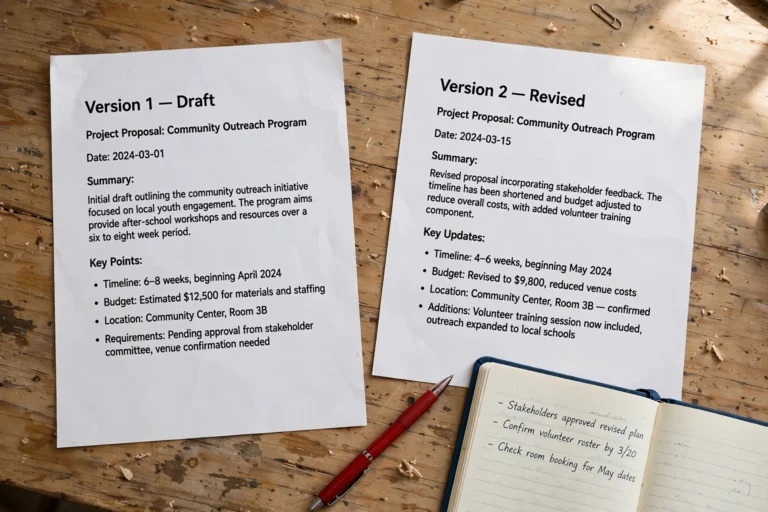
A few tools can speed up the editing pass — but treat them as assistants, not solutions. Paraphrasing tools like QuillBot or Wordtune can suggest alternate phrasings when you are stuck on a robotic sentence. Grammar checkers like Grammarly flag the overly formal constructions AI favors. And running your own draft through a free detector like GPTZero before publishing shows you which paragraphs still read as synthetic, so you can target your rewrites.
Be skeptical of “AI humanizer” tools that promise to make text undetectable with one click. Detectors are trained on their output too, and the arms race means today’s bypass is tomorrow’s flag. Manual editing remains the only durable approach.
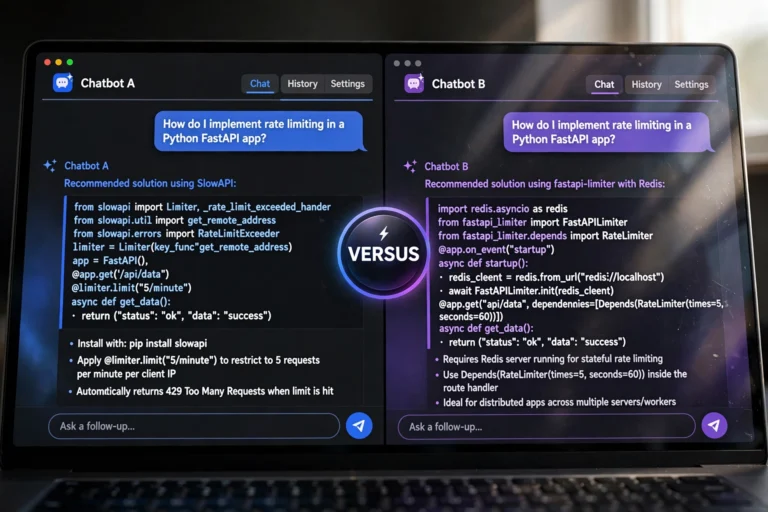
You can also use an AI chatbot itself as an editing partner rather than a ghostwriter. Paste a robotic paragraph and ask it to “rewrite this in a conversational tone with varied sentence lengths,” then edit its output again yourself. The key difference is control: you are directing specific changes to specific sentences, keeping your ideas and examples intact, instead of accepting a full draft wholesale. Targeted rewrites like this keep your fingerprints on the text, which is exactly what detectors measure.
How to Avoid AI Detection — and Where You Shouldn’t Try
An honest boundary matters here. Trying to pass AI writing off as your own in school assignments, college applications, or professional certifications is academic dishonesty, and detection tools are only one of the ways people get caught. In journalism and client work, undisclosed AI content can violate contracts and editorial policies.
The legitimate uses — drafting your own marketing copy, speeding up first drafts you then genuinely rewrite, or polishing your own non-native English writing — are where these techniques belong. When in doubt, disclose: “drafted with AI assistance, edited by me” is honest and increasingly normal.
FAQs About Avoiding AI Detection
Can AI detectors be trusted completely?
No. Studies have repeatedly shown false positives, especially for non-native English writers whose formal, careful prose can resemble AI patterns. Most detector companies advise using scores as one signal among many, not as proof.
Does paraphrasing AI text with another AI tool work?
Sometimes temporarily, but detectors are trained on paraphraser output too. Heavy AI-to-AI paraphrasing often produces awkward text that still scores as synthetic — and reads worse than the original.
What is the fastest legitimate way to humanize AI text?
Do one focused editing pass: cut the telltale phrases, break up uniform paragraphs, add two specific examples from your experience, and rewrite the intro and conclusion. Thirty focused minutes beats any one-click tool.
Is it legal to make AI text undetectable?
In most contexts it is not illegal, but it can violate rules — school honor codes, publisher policies, or platform terms of service. The technique is legal; the deception in certain settings is the problem.
Conclusion
Learning how to avoid AI detection comes down to one skill: editing like a human. Vary your rhythm, cut the robotic phrases, add real specifics and opinions, and check your work with a detector before publishing. There is no shortcut that survives contact with the next detector update — but a genuinely humanized draft reads better for everyone, which was always the real goal.