What Is Affiliate Marketing for Beginners? (2026)
What is affiliate marketing for beginners? It is one of the simplest ways to earn money online: you recommend products you trust using a special tracking link, and when someone buys through that link, you earn a commission. You never touch inventory, handle shipping, or deal with customer support — the company does all of that, and you get paid for sending customers their way.
This guide explains how it works, what beginners realistically earn, and the seven steps to your first commissions in 2026.
How Affiliate Marketing Works (The Simple Version)
Every affiliate transaction has four players, but as a beginner you only need to understand the flow:
- The merchant — the company selling the product (a store, a software company, a course creator).
- The affiliate network — the middleman platform that tracks sales and pays you (or the merchant’s own program).
- You, the affiliate — the person recommending the product through content: a blog post, a YouTube video, a social media post, or an email.
- The customer — the person who clicks your link and buys.
Here is the actual sequence:
- You join a company’s affiliate program (usually free) and get a unique tracking link, like
store.com/shoes?ref=yourcode123. - You create helpful content about the product — a review, a tutorial, a “best of” list — and include your link.
- A reader clicks your link. A cookie in their browser credits any purchase to you for a set window (typically 24 hours to 90 days).
- They buy. The sale is tracked, and you earn a percentage as commission — paid monthly or when you cross a payout threshold.
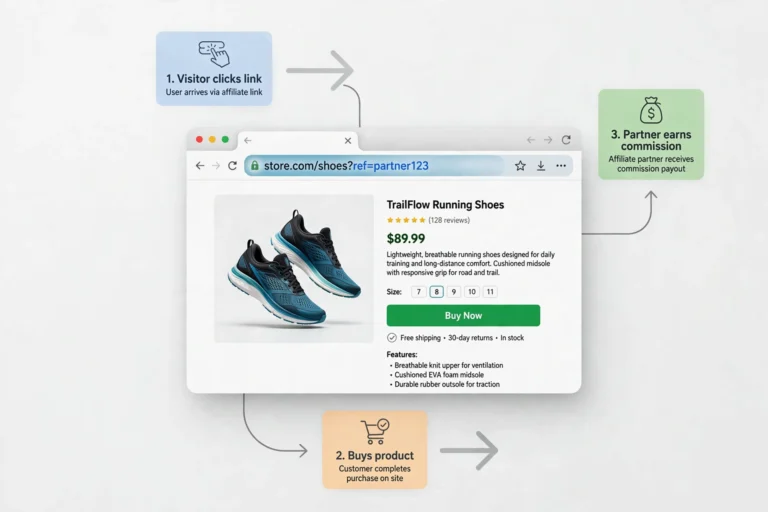
That is the entire business model. Your job is two things: create content people trust, and get it in front of them.
How Much Can Beginners Actually Earn?
Let us skip the hype and talk real numbers. Commission rates depend on the niche:
- Physical products (Amazon-style): 1–5% per sale. Low, but easy to join and convert.
- Digital products (courses, ebooks): 30–50% per sale. Much higher, because there are no manufacturing costs.
- Software (SaaS): 20–40% — often recurring, meaning you get paid every month the customer stays subscribed.
- Web hosting and tools: flat payouts of $50–$150 per referral are common.
Realistic beginner timeline: expect $0 in month one while you build content, your first commissions ($20–$100) in months 2–3, and $200–$1,000/month within 6–12 months of consistent publishing. Affiliate marketing compounds — one good article can pay you for years. For other zero-skill options for your first online dollars, check our guide to 11 Legit Survey Sites That Pay Cash — faster, but much smaller.

How to Start Affiliate Marketing: 7 Steps
Step 1: Pick a Niche You Can Actually Talk About
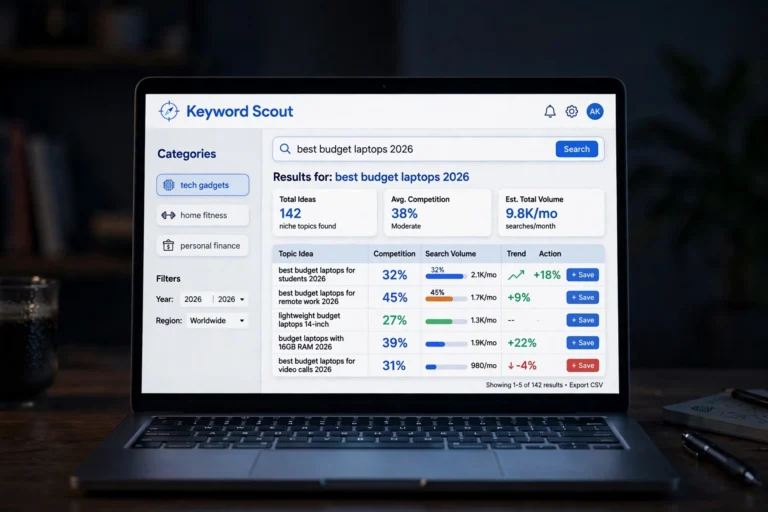
Your niche is the topic you will create content about for months. Pick something you use, understand, or genuinely want to learn — “best budget laptops,” “home coffee gear,” “beginner fitness equipment,” “personal finance apps.” The best niches for beginners share three traits: products people actually buy, companies with affiliate programs, and an audience searching for recommendations.
Step 2: Choose Your Platform
You need one place where your content lives. Beginners do best picking ONE and going deep:
- Blog/website: slowest to grow, but highest long-term income — search traffic compounds. Our guide how to start a blog for free walks you through setup.
- YouTube: product reviews and tutorials convert extremely well because viewers see the product in action.
- TikTok / Instagram: fastest to get views, but links are limited and income is less stable.
- Email newsletter: small but loyal audiences buy at the highest rates of any channel.
Step 3: Join Affiliate Programs
Sign-up is free and takes minutes. Join programs in your niche only — not dozens you will never use. Where to look:
- Amazon Associates: huge product range, easy approval, low commissions — fine as a starting point.
- Affiliate networks: platforms that host thousands of programs in one place (search for ones serving your niche).
- Direct programs: most software companies, course platforms, and web hosts run their own programs with better payouts — just search “[company name] affiliate program.”
- Digital marketplaces: course and ebook platforms typically pay 30–50% commissions.
Step 4: Create Content That Recommends Without Feeling Salesy
Content that earns commissions is content that helps first. The formats that work best for beginners:
- Product reviews: honest pros, cons, and who it is for. Include what you disliked — it builds trust and actually increases conversions.
- “Best X for Y” lists: compare 3–7 options. These rank well in search and readers arrive ready to buy.
- Tutorials: “How to set up X” articles and videos — teach the setup, link the tools you used.
- Problem-solving posts: “How to fix X” or “X vs Y” comparisons that naturally mention products.
Example: A beginner in the coffee niche writes “Best Pour-Over Coffee Makers Under $50 (2026),” tests three drippers, ranks them honestly, and links each with an affiliate link. One article, three products, and it can earn commissions for years.
Step 5: Disclose Your Affiliate Links (Required)
In the US, the FTC requires clear disclosure anywhere you post affiliate links — networks will ban you for hiding it. A simple line works everywhere:
“This post contains affiliate links. If you buy through them, I may earn a commission at no extra cost to you.”
Step 6: Drive Traffic to Your Content
Great content earns nothing without visitors. Pair one long-term channel with one fast one:
- SEO (long-term): target specific search phrases like “best budget microphone for podcasting” — lower competition than big topics.
- Pinterest or short-form video (fast): pins and shorts can send traffic within days while your search rankings grow.
- Answering questions: genuinely helpful answers in Reddit communities, Facebook groups, and forums (never spam your link — help first, link only where it is allowed and relevant).
Step 7: Track, Test, and Improve
Your affiliate dashboard shows clicks and conversions per link. After a few weeks, look for patterns: posts with clicks but no sales need a better offer or call to action; posts with no clicks need more traffic. Small improvements compound — doubling a post’s click-through rate doubles its income with no new content.
Best Affiliate Programs for Beginners
Do not chase the highest commission first — chase programs you can get approved for and products you can genuinely recommend:
- Amazon Associates — accepts almost all beginners; low commissions but trusted by every buyer on earth.
- Web hosting affiliates — payouts of $50–$150 per referral; great if your content touches blogging or websites.
- Software affiliates — 20–40% recurring commissions; email tools, design tools, and VPNs all run generous programs.
- Course and digital product platforms — 30–50% commissions; ideal if your niche is education or skills.
- Creator marketplaces — many pay per signup rather than per sale, so you can earn before anyone buys anything.
Beginner Mistakes to Avoid
- Promoting products you never tried. Readers smell it instantly, and refunds kill your commissions anyway.
- Joining 20 programs at once. Three programs you use well beat twenty you forget about.
- Writing for everyone. “Best tech products” competes with giants; “best budget standing desks for small apartments” can actually rank.
- Quitting at 90 days. Almost everyone earns nothing in the first months — the ones who make it publish through that period. For more ranked methods, see how to make money online as a teenager.
- Ignoring email. A list of 500 subscribers who trust you will out-earn 50,000 casual social followers.
FAQ
Can I start affiliate marketing with no money?
Yes. Joining programs is free, and you can start on a social account or a free blog (see our guide to starting a blog for free). The only real cost is your time — a small budget speeds things up, but it is not required.
Do I need a website to do affiliate marketing?
No, but it helps a lot. Many beginners start on TikTok, YouTube, or Pinterest and do well. A website becomes valuable later: search traffic is steadier than social algorithms, and it is an asset you fully own.
How long until I earn my first commission?
Most consistent beginners see their first commission within 30–90 days of publishing content regularly. If you already have an audience (a YouTube channel, a big social account), it can happen in the first week.
Is affiliate marketing still worth it in 2026?
Yes — online shopping keeps growing, and companies keep paying for customers. What changed is that low-effort content no longer works: AI-generated spam does not rank or convert. Honest, hands-on reviews and tutorials still do very well.
Do I need to pay taxes on affiliate income?
In most countries, yes — affiliate commissions are self-employment income. In the US, earnings over $400 a year must be reported. Keep a simple spreadsheet of payouts from the start; it takes minutes and saves headaches later.
Conclusion
What is affiliate marketing for beginners boils down to this: recommend products you trust, earn commissions when people buy through your links, and build content that keeps paying you long after you publish it. Start with one niche, one platform, and three programs. Publish helpful reviews and tutorials consistently, disclose your links, and give it at least 90 days before judging results.
The beginners who earn are not the ones with secret tricks — they picked a niche they could talk about forever and refused to quit in month two. Your next step is simple: pick your niche today, join one program tonight, and publish your first review this week.